
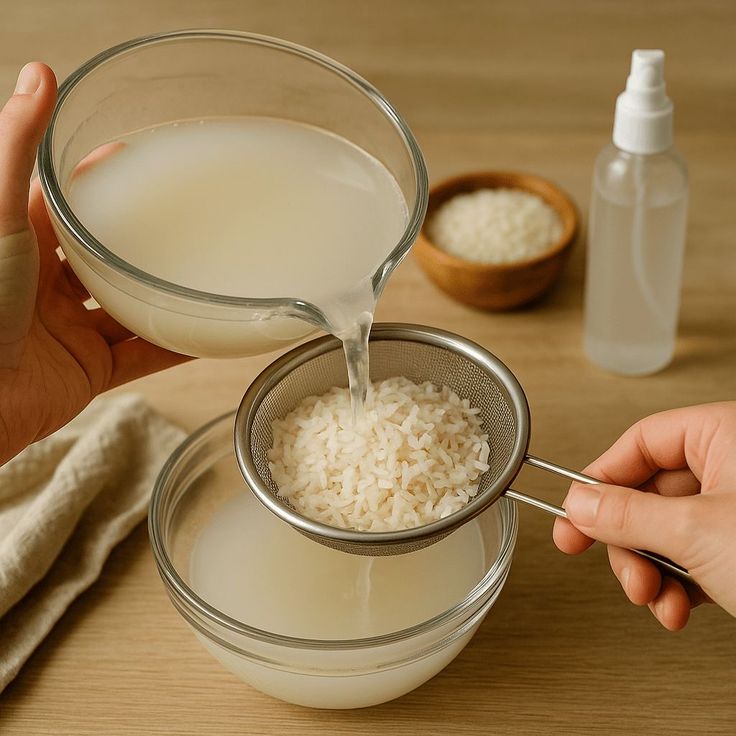
Long before the beauty industry started bottling and branding every conceivable hair growth solution, women in parts of Asia had a ritual that was as simple as the water left behind after rinsing rice. The Yao women of Huangluo village in China who are famous for having hair that grows past their feet and stays dark well into old age have credited fermented rice water as a cornerstone of their hair care practice for centuries. But does rice water actually help with hair growth, or is this another wellness trend riding on ancient credibility without modern substance?
What Does Rice Water Contain?
Rice water is exactly what it sounds like, it’s the starchy water left behind after rice has been soaked or boiled. What makes it more than just cloudy water is its nutritional composition. Rice water contains inositol, a carbohydrate that research has shown can penetrate damaged hair and repair it from within. It also contains amino acids, B vitamins, vitamin E, minerals, and antioxidants — all of which play meaningful roles in scalp and hair health.
Fermented rice water takes this a step further. The fermentation process lowers the pH of the water closer to that of natural hair, which helps seal the hair cuticle and reduce friction. It also increases the concentration of nutrients through the fermentation process, which is why many practitioners of this tradition specifically use the fermented version rather than plain soaked rice water.
What the Evidence Shows
The direct clinical evidence specifically linking rice water to accelerated hair growth in controlled human studies is still limited. Large-scale peer-reviewed trials are not yet abundant on this specific topic, which means the enthusiastic claims you see online sometimes run ahead of the formal scientific consensus.
That said, the indirect evidence is genuinely compelling. Research on inositol as one of rice water’s key active components has shown that it can reduce hair breakage and improve hair elasticity.
Research on amino acids confirms their role in supporting keratin production, which is the structural protein your hair is literally made of. And the historical tradition of populations with remarkable hair length and health consistently using rice water as a staple practice is not nothing — it is real-world observational evidence spanning generations.
