
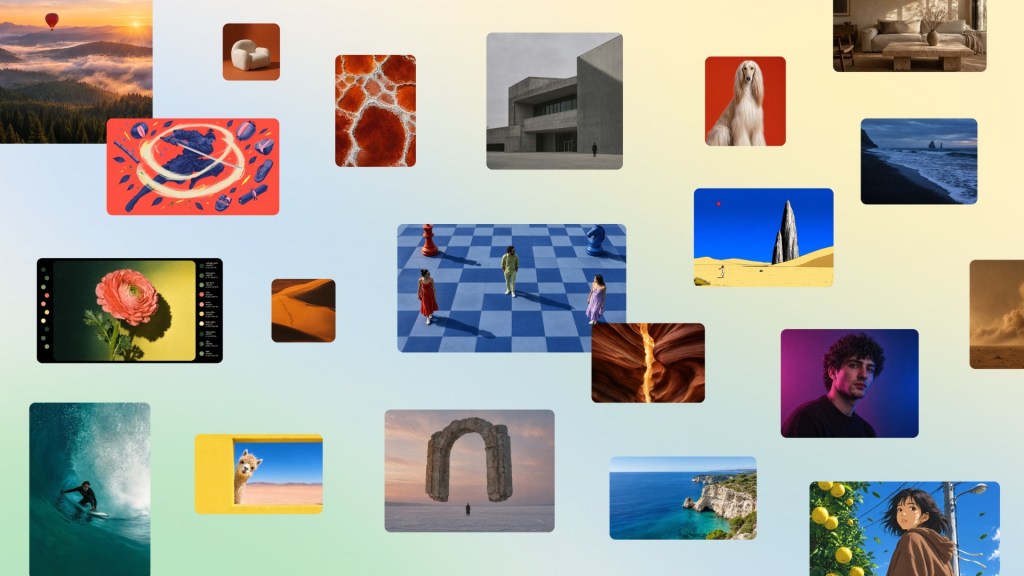
For years, Canva has leaned on outside AI tools to power image creation inside its design platform. That is changing. When Canva releases its first image generation model, it signals a shift from borrowing technology to building it, and it adds a new name to a crowded field led by Google, OpenAI, ByteDance and Meta. Here is a plain-language look at what was announced.
What Is Canva Craft ?
Canva Craft is the company’s first image generation model, developed by its in-house research team and described as built and trained from scratch. Canva says it is available to all users, with plans to expand access through its API and integrations with third-party chatbots such as ChatGPT and Gemini via its Model Context Protocol.
Researchers from Leonardo.ai, the media generation platform Canva acquired in 2024, contributed to the work.
How It Works: Plan First, Render Second
Unlike many image tools that jump straight to pixels, Craft works in two stages.
In the first stage, the model interprets a prompt and builds a plan. That plan considers where elements should sit, their relative size, visual hierarchy and how any text should appear. In the second stage, it renders the image based on that plan.
Reports say outputs can reach up to 2K resolution and come in as many as 30 aspect ratios, which suits everything from social posts to presentations.
What Makes It Different
The biggest twist is the training data. Rather than relying mainly on photographs, Canva says it trained the model on human-designed templates from its own library, including posters, social posts, presentations, infographics, menus and typography-heavy layouts.
That focus on designed compositions is meant to improve a few things:
– More accurate details in objects
– Clearer, more legible text, a common weak spot for image models
– Targeted edits that change one part of an image without disturbing the rest
– Easier conversion into layered, editable designs using Canva Magic
How It Rank
Early reports say Craft debuted fourth on the DesignArena image leaderboard, which would place Canva second among AI labs on that list behind OpenAI. These are preliminary results from a single benchmark, so they are best treated as a promising start rather than a final verdict.
Why Canva Built Its Own Mode
Cost and control are the likely drivers. Canva has used several third-party image models, and those usage fees add up at scale. An in-house model gives the company more say over quality, speed and pricing, and tighter integration with its editing tools. Canva has not shared how much it expects to save.
Two lower-cost versions, called Craftfast and Craft-ultrafast, are reportedly in development.
A Few Things Worth Keeping in Mind
– Some planned features, such as API and chatbot access, are still rolling out
– Benchmark rankings can shift as new models launch
– AI-generated visuals still benefit from human review, especially for brand work and factual accuracy
