
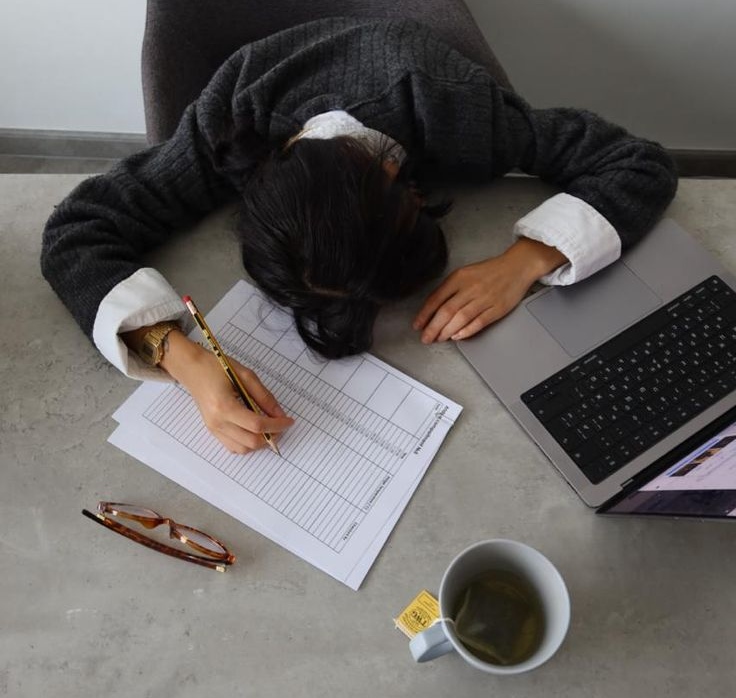
Work fatigue rarely has a single cause, it is usually the combined effect of several factors operating simultaneously.
Poor sleep is the most common and impactful contributor. Dehydration causes cognitive fatigue that most people never connect to their water intake. Sitting in one position for extended periods reduces circulation and produces physical tiredness that masquerades as mental exhaustion. Decision fatigue from making too many choices without recovery time depletes the prefrontal cortex. And the constant partial attention demanded by notifications and multitasking creates a cognitive load that drains mental energy faster than sustained focused work ever would.
How to Cut Fatigue at Work
Take Your Sleep More Seriously
No strategy for cutting work fatigue produces meaningful results on a foundation of chronic sleep deprivation. Seven to nine hours of quality sleep is not a luxury for people who want to feel good at work. It is the non-negotiable infrastructure that everything else is built on.
If your work fatigue is worst on Monday mornings and builds across the week, inconsistent sleep timing is often the culprit. Going to sleep and waking at consistent times, even on weekends regulates your circadian rhythm in ways that dramatically improve the quality of energy you bring to work every day.
Hydrate
Mild dehydration as little as one to two percent of body weight in fluid loss produces measurable declines in concentration, memory, and mood that feel indistinguishable from general fatigue. Most people reach for coffee when this happens, which provides a temporary stimulant effect while doing nothing to address the underlying hydration deficit.
Starting your workday with a large glass of water before coffee, keeping a filled water bottle visible at your desk, and drinking consistently throughout the day rather than reactively when thirsty addresses one of the most common and most correctable causes of work fatigue without any additional cost or effort.
Move Your Body Every Ninety Minutes
Prolonged sitting reduces blood flow, slows metabolism, and produces a physical tiredness that accumulates progressively throughout the day. The solution is not a gym session, it is movement distributed throughout the workday in short, consistent intervals.
Setting a timer for every ninety minutes as a movement cue a short walk, some stretching, a brief exercise circuit, even just standing and moving around for five minutes restores circulation, refreshes cognitive function, and prevents the progressive energy drain that unbroken sitting creates. The research on this is consistent enough that many workplace wellness experts now consider regular movement breaks as important as sleep for sustained daily energy.
Protect Your Most Important Work Hours From Low-Value Tasks
One of the most effective but least discussed ways to cut fatigue at work is strategic task sequencing. Most people scatter their most cognitively demanding work randomly across the day like answering emails until noon, attempting deep work in the afternoon when energy is naturally lower, and ending the day with administrative tasks when concentration has already given out.
Reversing this: scheduling your most demanding, highest-value work in your peak energy window, typically the first two to three hours of the workday, and reserving lower-demand tasks like email and admin for your natural energy dips produces dramatically better output with dramatically less effort and fatigue.
Stop Multitasking and Start Protecting Focus Blocks
The research on multitasking is settled and consistently ignored — the human brain does not actually multitask. It switches rapidly between tasks, and each switch carries a cognitive cost in the form of refocusing time and mental energy. People who believe they are productive multitaskers are typically producing lower quality work while depleting their energy reserves faster than focused workers doing one thing at a time.
Turning off non-essential notifications, closing unused browser tabs, and protecting focused work blocks of sixty to ninety minutes where a single task receives complete attention reduces cognitive load, produces better work, and leaves you significantly less mentally exhausted by the end of the day.
